 Harp Gallery
 There is a common belief that furniture made with veneer is something to avoid, and that solid wood is always better. Veneer means a thin layer of wood glued down to other wooden boards. Cabinet makers will say that factors of thickness, workmanship and condition determine whether veneering is good or bad.
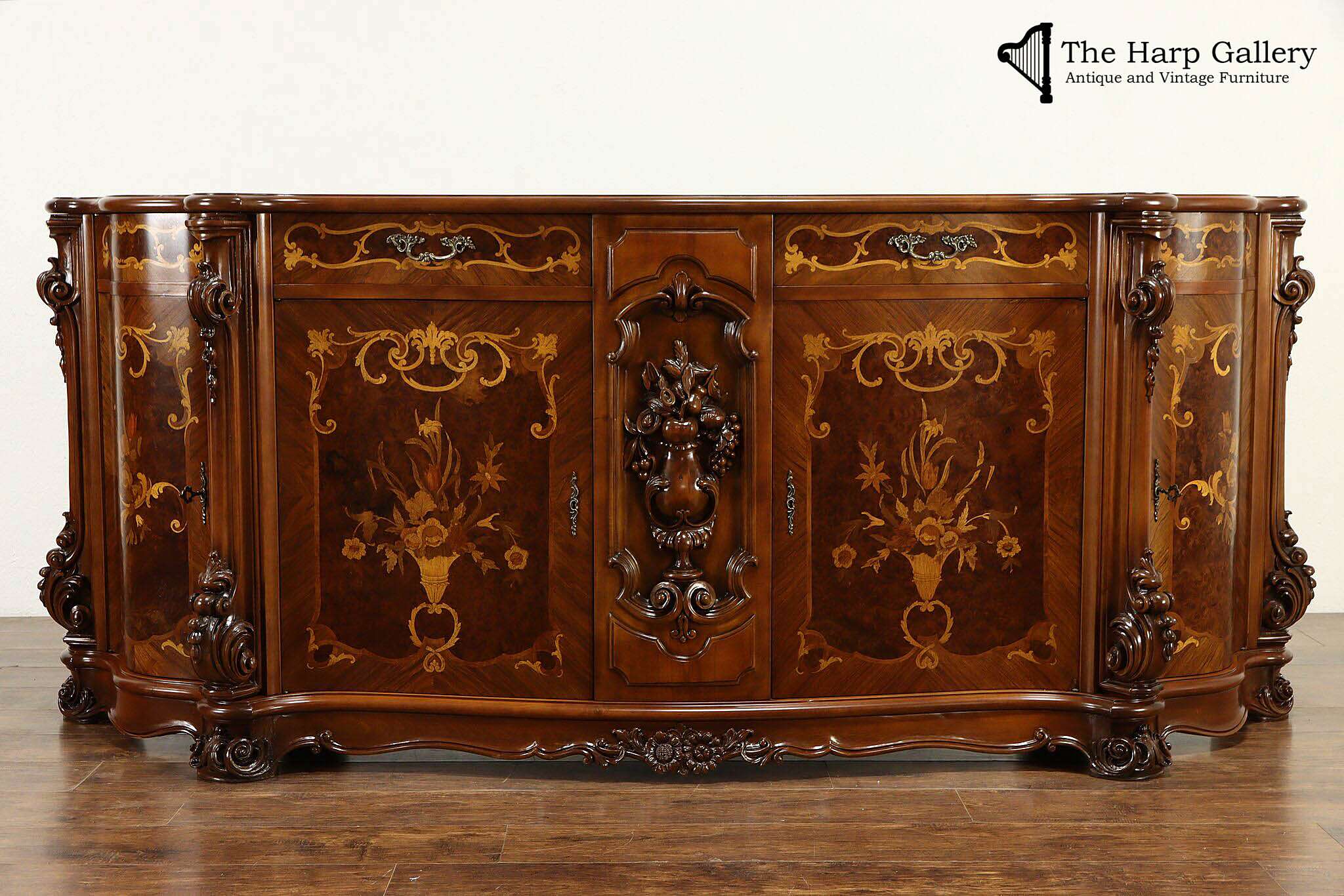
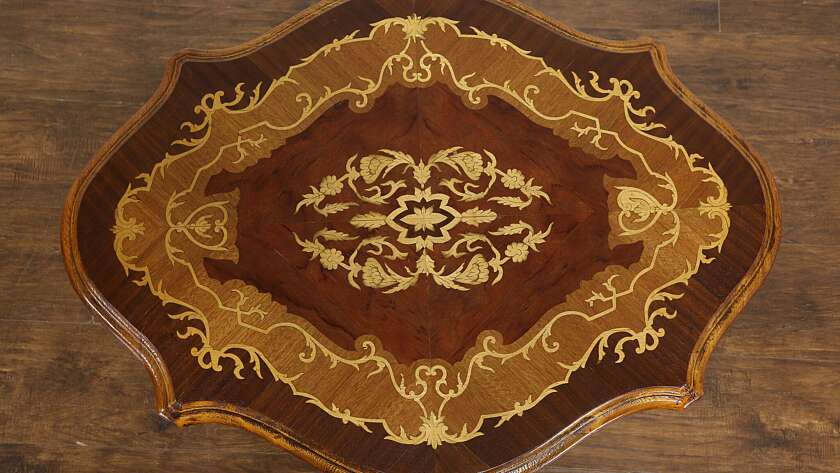
Veneer is not a modern invention. Thousands of years ago, fabulous veneer work in ebony and ivory was put into King Tut’s tomb in Egypt. Veneer techniques in the Renaissance became very sophisticated, using tiny pieces of exotic woods and burl grain to create intricate designs or lavish scenes, called marquetry or intarsia work. Much of the finest royal furniture for hundreds of years employed lavish veneer construction, using the finest species of wood and tiny pieces of burl or exotic grain.
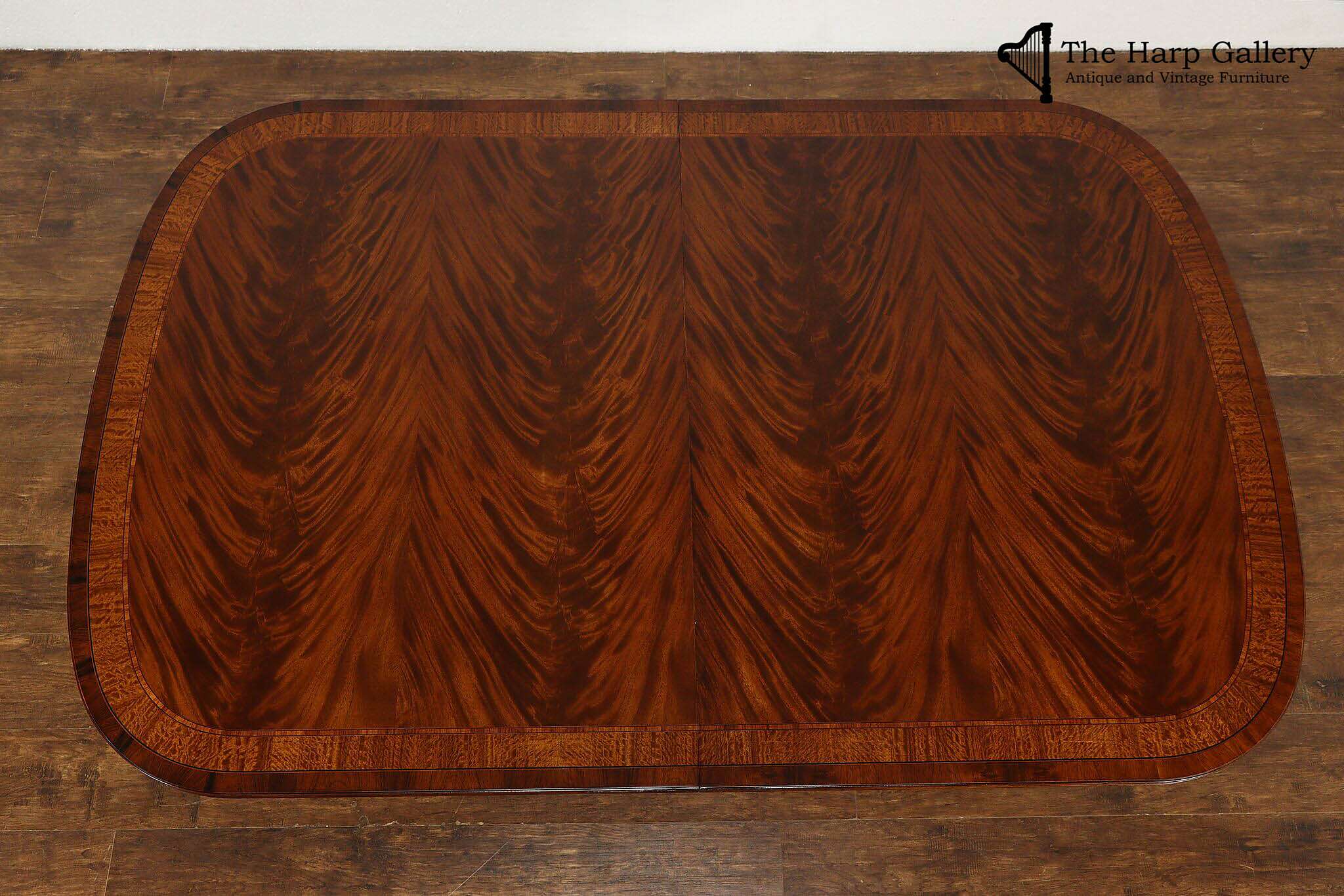
Another reason for veneer is “matching,” or making the right and left grain mirror images of each other, like pages of a book. There is also quarter matching and pie-shaped or sunburst matching for dazzling special effects in wood.
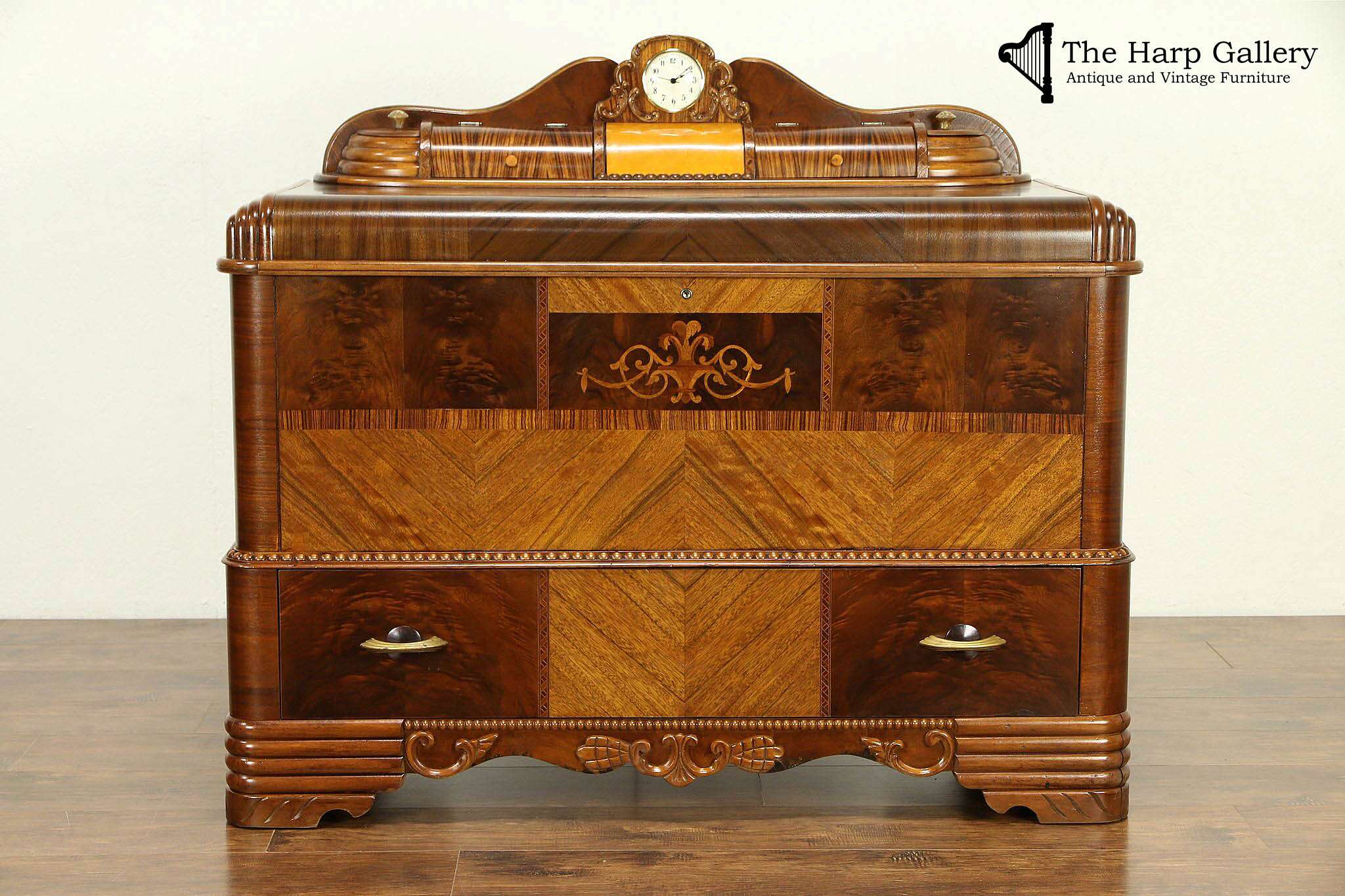
Cabinetmakers have always sought boards with especially beautiful grain, like the fork of a mahogany tree for “flame” grain, or the curly “burl” found near the knots of walnut trees. Wide planks of especially beautiful wood are gorgeous, but tend to warp and curl over time. The technique of veneering allows this beautifully grained wood to be glued to more stable wood with less attractive grain for results that are beautiful and durable. Attractive appearance on curved surfaces is another use of veneer, for example, the curved case of a grand piano is always veneered.
Beginning in the 1800’s, veneer was employed to make valuable woods like mahogany or walnut go farther by gluing them to less prized species, like maple or birch. Around 1900, highly prized quarter-sawn or tiger oak was often veneered over regular cut solid oak.
Many examples of veneer work have endured for hundreds of years. Veneer repair requires a skilled woodworker, but can be done. Old veneer was long-lasting, and could be retouched or sanded and refinished over and over again.
Starting about 1970, industrial furniture manufacturers developed the technique of gradually making veneer thinner, and today, hardwood veneers are as thin as 1/64 of an inch! This modern veneer looks like typing paper, it is almost transparent, and can never be sanded, refinished or significantly touched up if damaged. On most modern furniture and kitchen cupboards, veneer is not glued to natural hardwood, instead it is attached to particle board, which is a mixture of sawdust and glue which is pressed into large sheets. Often the edges are finished with real wood, so the veneer and particle board construction is not visible. On better furniture and cabinets, real wood is used where it shows – legs, raised panels, edges, etc.
Most new furniture is built in this manner, and often advertised as “solid hardwood and veneers,” although it is certainly not what most consumers would mean by “wood.” This construction has some advantages: 1) particle board doesn’t warp like real wood unless it gets wet, 2) it conserves valuable hardwood, and 3) it recycles sawdust, which would otherwise be in a landfill. Most mainstream furniture has been constructed in this manner for some years. New furniture is like a new toaster or TV, it is temporary, never to be repaired or restored, and definitely not an heirloom for the next generation.
There has always been good and bad workmanship in veneered furniture, just as there has been in solid wood furniture. Old veneer that has bubbles, loose edges, missing pieces and so on is difficult to repair. Old veneer that is in great condition will probably stay in great condition, and can be refinished or restored when it becomes necessary, perhaps far in the future. Modern veneer is another matter entirely. Ultra-thin veneer has its place in new furniture that is intended to be used and then discarded when worn, rather than restored for future generations.
How bad is wood veneer on furniture? As Oscar Wilde said, “The truth is rarely pure and never simple.” The history of veneer on furniture is a long and honorable tradition, and the answer depends on workmanship, condition and thickness of the veneer itself.