 Harp Gallery
 After years of being dismissed as “that DIY farmhouse trend,” authentic painted furniture is reclaiming its status as serious art.
For the past decade, painted furniture got a bad reputation. Too many beautiful antiques were ruined with amateur chalk paint jobs during the modern farmhouse craze. Dealers cringed. Collectors mourned. And the phrase “painted furniture” became synonymous with Pinterest fails and regrettable DIY disasters.
But something interesting is happening right now. The painted furniture coming back into fashion isn’t the distressed-gray-everything aesthetic that dominated our feeds. It’s the real deal: authentic Gustavian pieces from 18th-century Sweden, early American folk art chests with hand-painted motifs, and European immigrant trunks with original rosemaling decoration that’s survived for two centuries.
According to Elle Decor, antiques dealer Christopher Cawley notes that painted furniture is shining through, especially Gustavian pieces which are very hot right now (Elle Decor). Designer Emily Mahon adds that buyers are interested in provenance more than ever, wanting pieces with stories and soul.
Why Original Painted Furniture Commands Premium Prices
The painted furniture trend happening in 2026 isn’t about slapping color on solid wood. It’s about recognizing authentic pieces as the art they’ve always been.
Throughout the 18th and 19th centuries, professional decorative painters in America and Europe used furniture as their canvas. According to the American Folk Art Museum, these artists created expressive work through masterful application of colorful paints and pigmented glazes in visually dynamic patterns (American Folk Art Museum). Their names are largely lost to history, but their fingerprints remain in the work they left behind.
Take Swedish Gustavian furniture. In the late 1700s, Swedish artisans reinterpreted French Neoclassical design by simplifying details, using local woods like pine and birch, and painting pieces in light colors to brighten interiors during long, dark Scandinavian winters (House Beautiful). The result? Furniture that looks equally at home in sleek modern settings or reimagined traditional spaces.
Consider the Swedish Grain Painted 1870s Immigrant Trunk that made the journey from Sweden to Minnesota. The original “feather” grain painting has just enough wear for antique character without losing its impact. Solid pine construction with hand-cut dovetail joints and wooden pegs, it represents both craftsmanship and the immigrant experience. This isn’t decoration—it’s history you can touch.
The Cottagecore Connection
The cottagecore and “granny chic” aesthetic sweeping through Midwest design plays directly into painted furniture’s resurgence. As Midwest Design explains, it’s a warmer version of Scandi design with less harsh contemporary finishes and more floral patterns, mismatched textures, and ornate fixtures (Midwest Design).
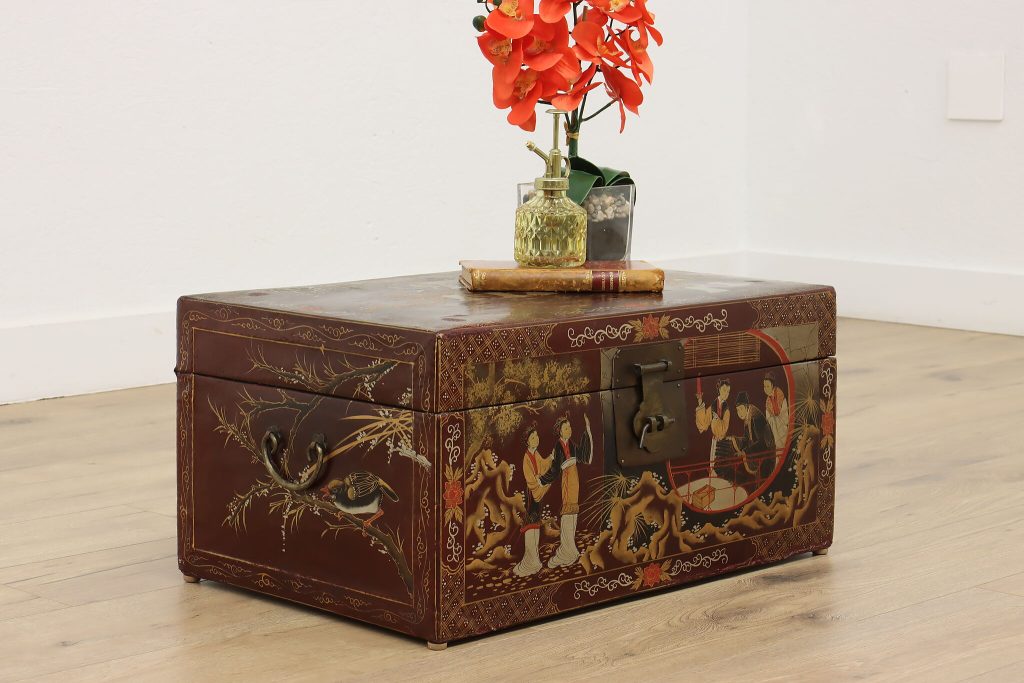
People want spaces that feel collected over time, not catalog-ordered. Painted furniture delivers that instantly. The Scottish 1840 Folk Painted Trunk from Harp Gallery exemplifies this perfectly. The original hand graining on poplar hardwood tells a story spanning nearly two centuries. Inside are small drawers and a double secret compartment—functional design meets artistic expression. Use it as a coffee table and suddenly your living room has gravitas that no mass-produced piece could ever provide.
Folk Art That Tells Stories
Early American painted pieces carry particular weight right now because they represent authentic American craftsmanship from an era when furniture painting was a respected trade. In colonial America, when the country was relatively poor, people painted humble furniture with rich wood graining and decorative designs to make it look more expensive. Professional painters used techniques like marbleizing to imitate French and English furniture, creating effects that glorified even the simplest pieces.
The American Folk Art Museum notes that decorating furniture with paint was especially prominent in the 18th and 19th centuries when folk artists used chairs, chests, tables and cupboards as their canvases. Early American homes were vivid with furniture painted in arrays of colors—far from the bland, neutral spaces we associated with “colonial” style for so long.
Norwegian and Scandinavian rosemaling presents another fascinating tradition. This decorative painting style features intricate floral and geometric patterns that immigrant families brought to America. The Norwegian Rosemaling Antique 1819 Dowry Chest showcases this art form at its finest. Hand-painted Scandinavian folk art with well-worn decoration that’s survived over 200 years, solid pine construction with hand-cut dovetail joints—this is the kind of piece that grounds an entire room. The original finish has been waxed and buffed, preserving every mars and loss as proof of authenticity.
Why Authenticity Matters More Than Ever
Here’s what separates the 2026 painted furniture trend from the modern farmhouse era: provenance matters. Collectors want to know where pieces came from, who made them, when they were painted. As Veranda reports, there’s been an uptick in painted furniture at design markets, but specifically pieces with natural patina and hand-painted motifs rather than mass- produced distressing (Veranda).
The difference between authentic painted furniture and modern reproductions is immediately apparent once you know what to look for. Original paint shows honest wear in logical places. Hand-painted motifs have slight variations and imperfections that prove human hands created them. The wood underneath has aged naturally, with shrinkage and patina that can’t be faked.
How To Style Painted Furniture Today
The beauty of authentic painted furniture is its versatility. Gustavian pieces painted in soft grays and blues work beautifully in modern, minimalist spaces—they provide warmth without overwhelming clean lines. Folk art pieces with bolder decoration become statement items in eclectic rooms, anchoring collections of art and textiles.
Mix painted and unpainted wood freely. A pale gray Gustavian chest pairs gorgeously with natural oak floors. A vibrant folk art trunk adds personality to a room full of contemporary furniture. The key is treating these pieces as art, not just storage.
Don’t refinish or repaint authentic pieces. That original surface—even if worn, even if imperfect—is what makes these items valuable both financially and aesthetically. Each paint chip, each faded section, each area of honest wear tells part of the piece’s story.
The Investment Case
Painted furniture represents one of the smartest antique investments right now because the market hasn’t fully caught up to demand. While everyone’s been chasing mid-century modern and brown furniture, authentic painted pieces have remained relatively affordable.
That’s changing fast. Apartment Therapy reports that folk art furniture painting is becoming a bona fide DIY trend for 2025 and into 2026, driving renewed interest in authentic pieces (Apartment Therapy). As more people discover the beauty of real painted furniture, expect prices on museum-quality examples to rise significantly.
The Bottom Line
Painted furniture is shedding its association with amateur DIY projects and reclaiming its rightful status as serious folk art. Whether it’s refined Gustavian design or bold American folk decoration, these pieces represent centuries of craftsmanship, cultural tradition, and artistic expression.
When you bring authentic painted furniture into your home, you’re not following a trend—you’re investing in art history. Each piece tells a story about the hands that made it, the family that cherished it, and the journey it took to reach you.
Ready to explore authentic painted furniture? Browse Harp Gallery’s collection of Swedish immigrant trunks, folk art chests, and European painted pieces with original finishes that prove provenance and authenticity matter more than perfection.